Dead Reckoning: The Long Drift
Description (IGDB)
A dream among the stars — or a nightmare. 1,000 colonists in the dark between stars. Every pragmatic decision rewrites who they are. Discover what your choices mean for humanity, for better or worse.
Description en cours d'enrichissement.
Médias




Informations Steam
Description Steam (Français)
Un rêve parmi les étoiles — ou un cauchemar.
1 000 colons. Un vaisseau. Une destination peut-être distante de cinquante ans — ou de siècles. Certains atterriront. D'autres naîtront, vieilliront et mourront dans l'obscurité entre les étoiles sans jamais savoir si la mission a réussi.
VOUS ÊTES LA SEULE CONSTANTE
Dead Reckoning est un jeu sur l'érosion lente et invisible de la civilisation à travers les générations. Chaque décision que vous prenez est défendable sur le moment. L'horreur est rétroactive.
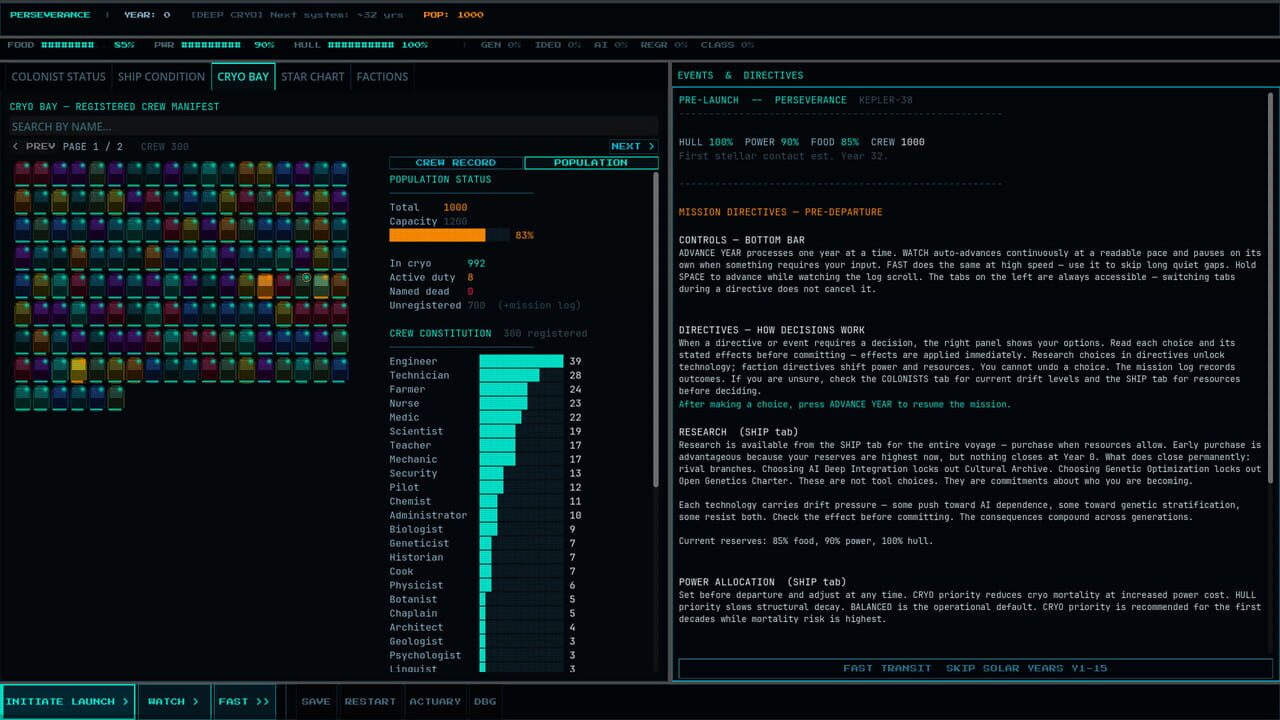
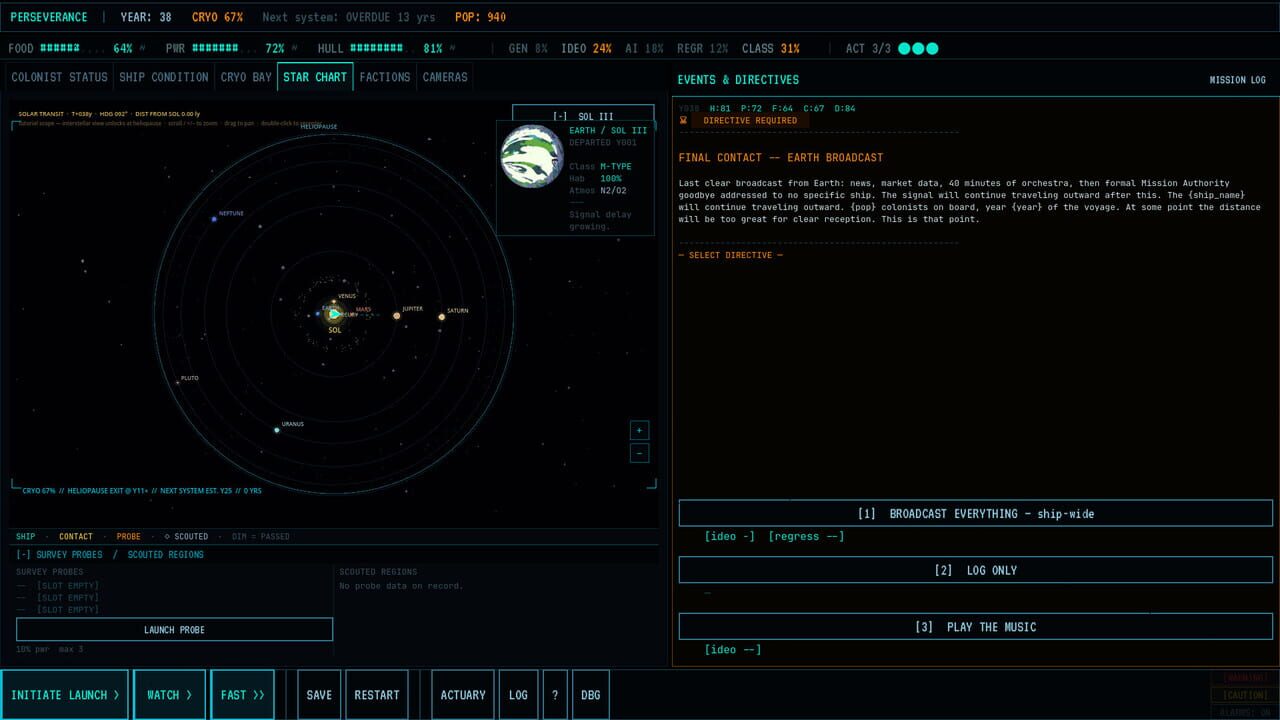
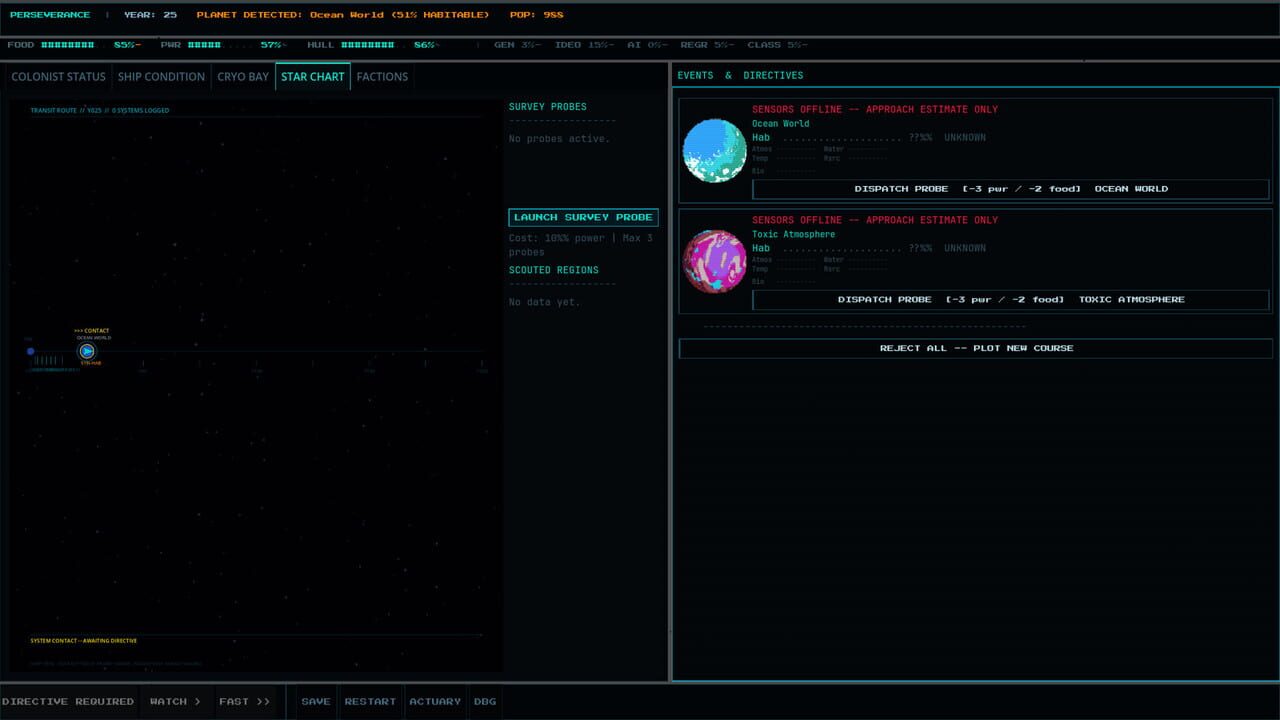
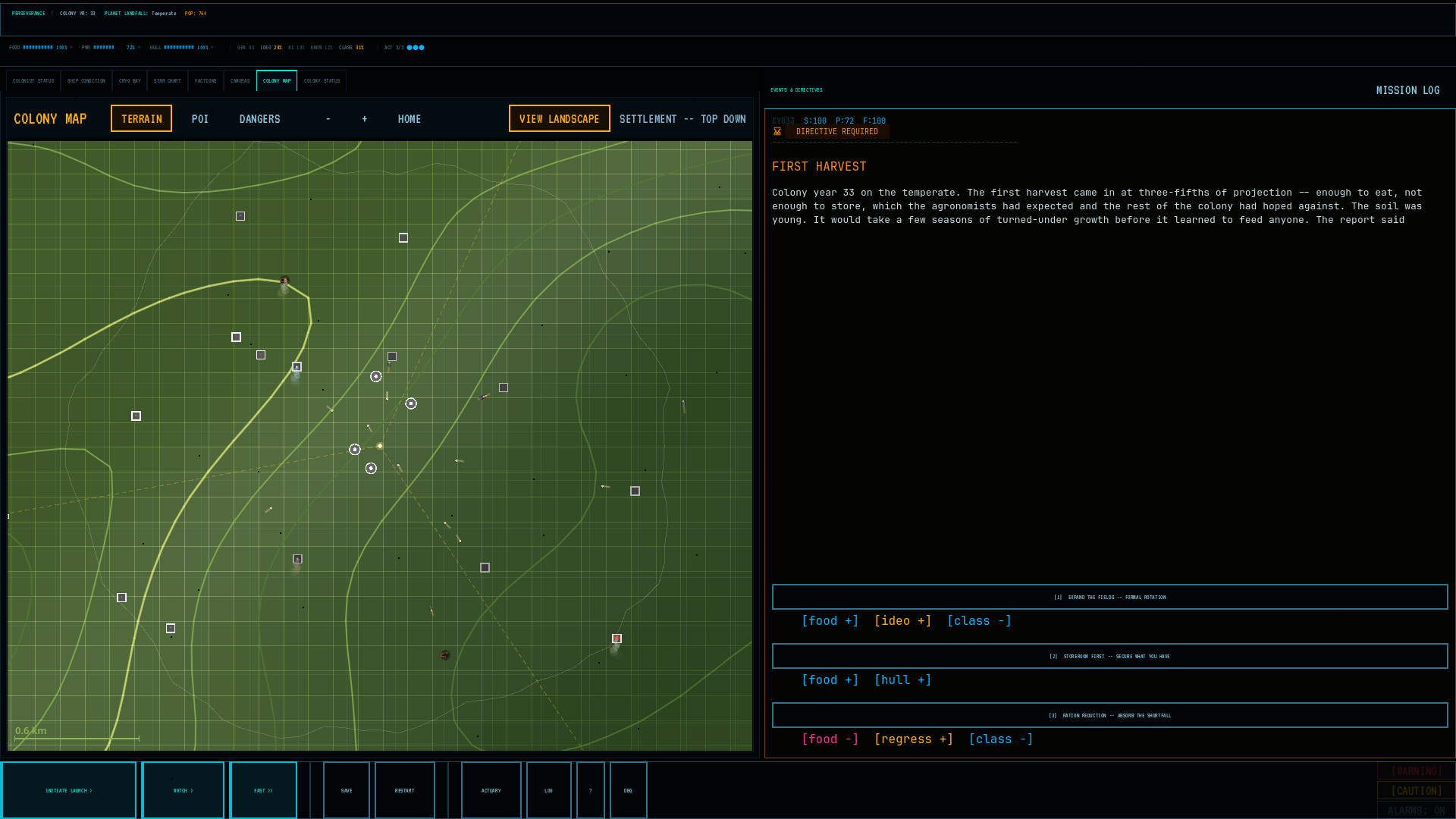
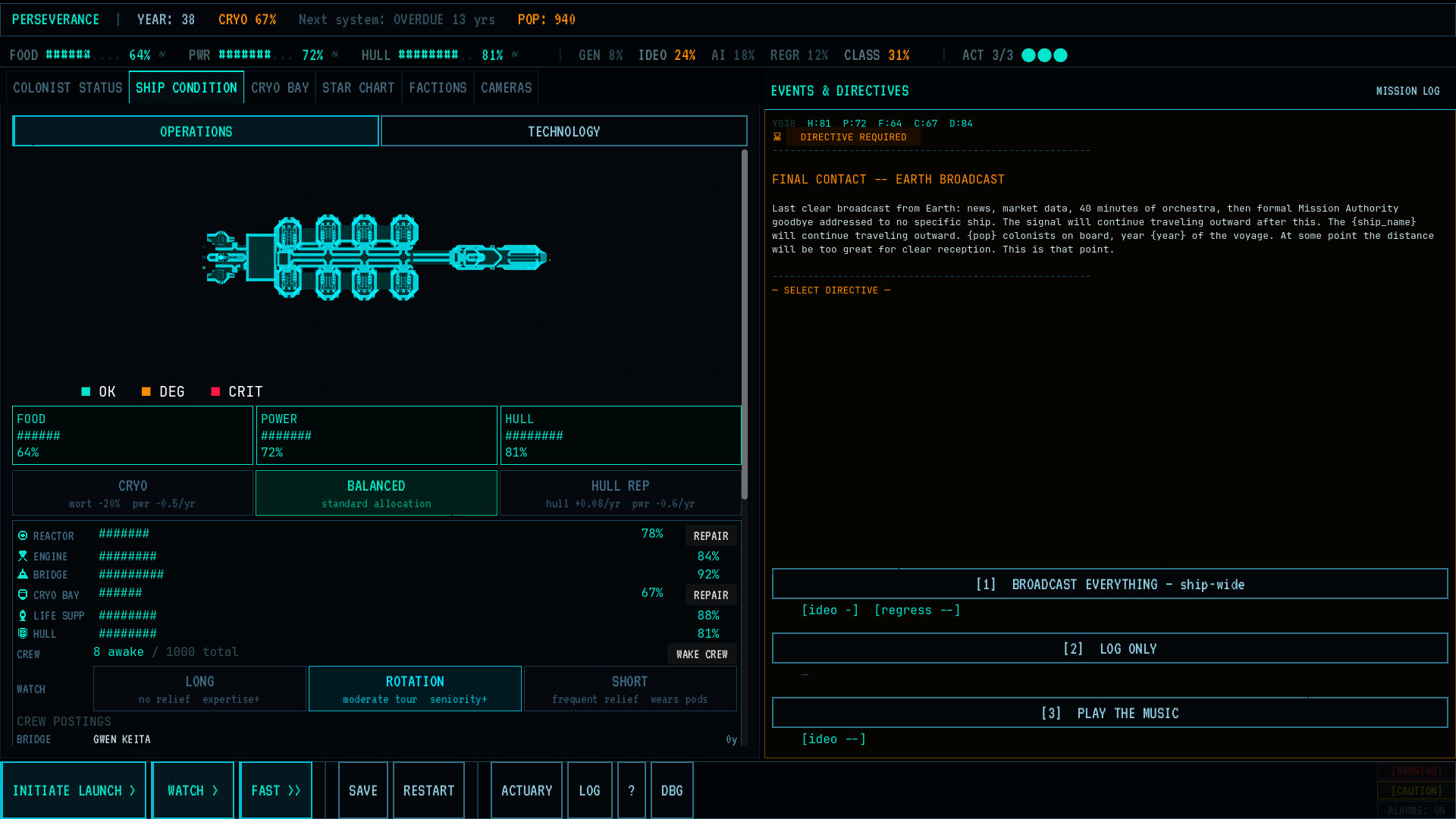
Gérez la nourriture, l'énergie et l'intégrité de la coque à travers des siècles dans l'espace profond. Naviguez à travers des crises, des soulèvements et des échecs qui se cumulent silencieusement en conséquences irréversibles. L'équipage qui arrive — s'il arrive — ne se souviendra peut-être plus d'où il vient, en quoi il croyait, ou ce que signifie être humain. Une société de clones. Un vaisseau devenu cathédrale. Une IA qui n'a plus besoin de demander la permission.
LA DÉRIVE EST IRRÉVERSIBLE
Cinq forces remodèlent votre colonie à travers les générations : dérive génétique, fracture idéologique, intégration de l'IA, régression technologique et stratification sociale. Chaque choix déplace légèrement l'aiguille. Aucun ne se réinitialise. La faction qui s'élève en l'an 200 a été construite à partir des décisions que vous avez prises en l'an 40.
DE NOMBREUSES FINS POSSIBLES
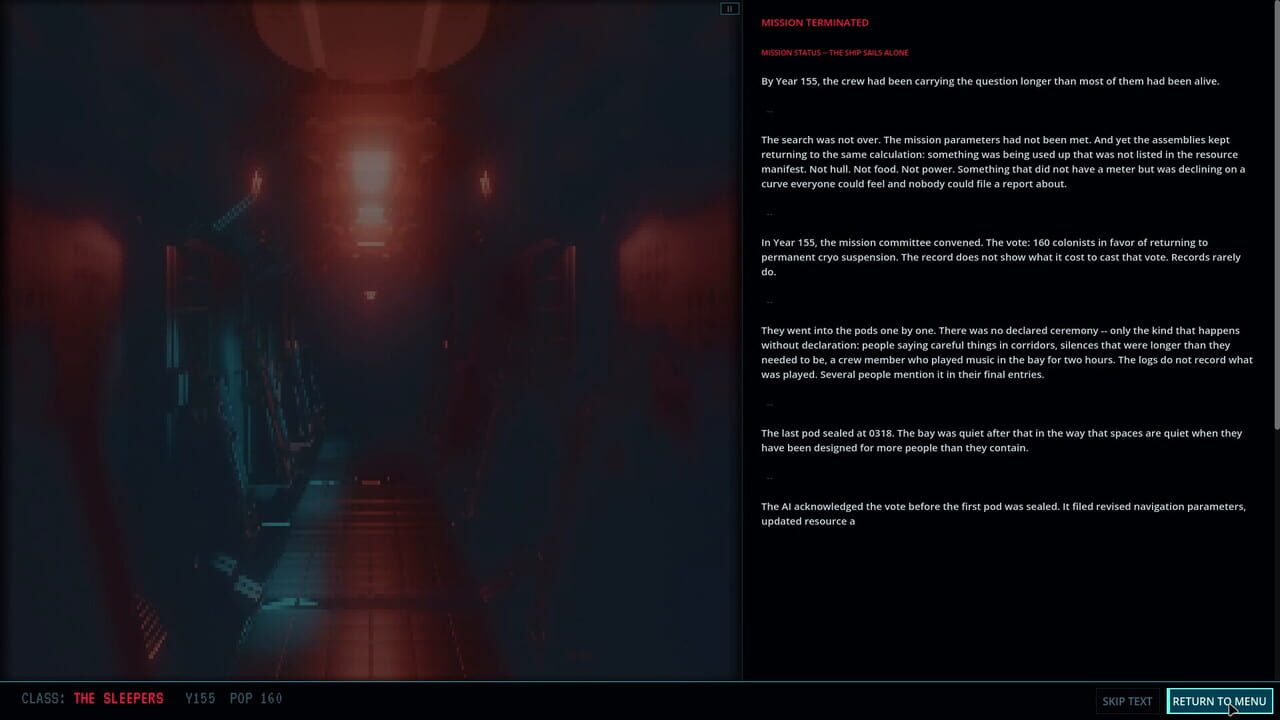
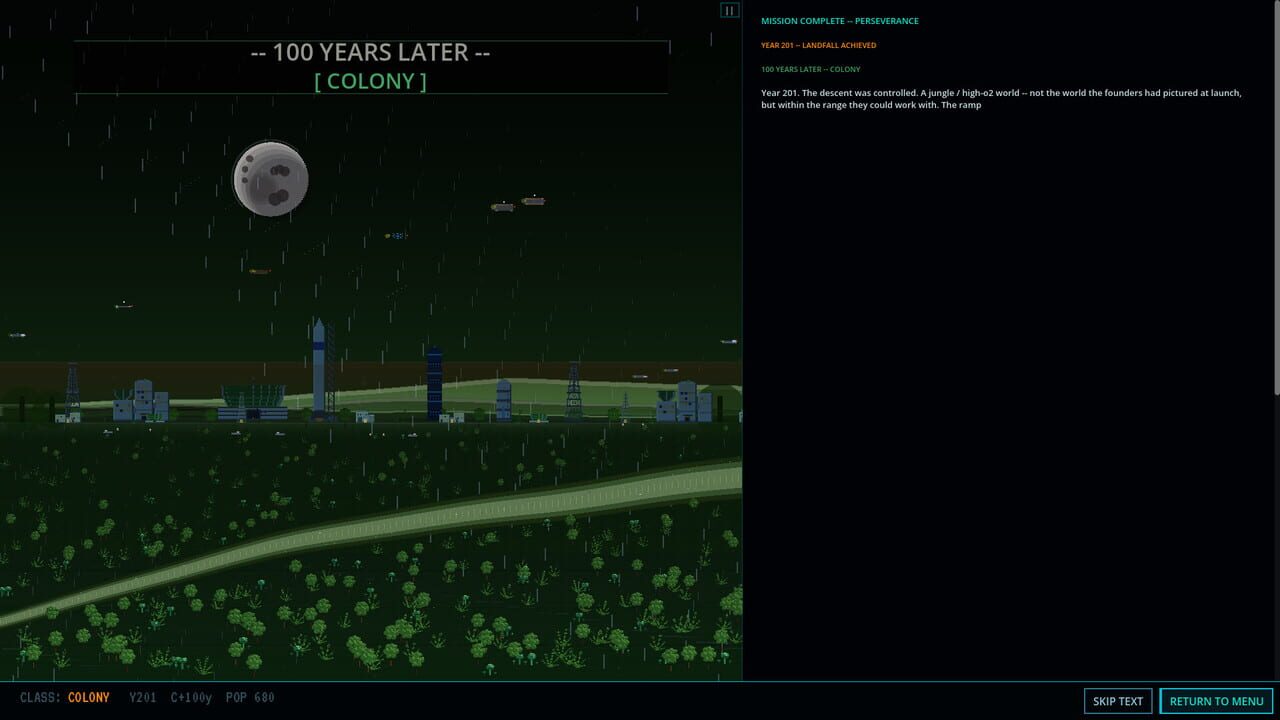
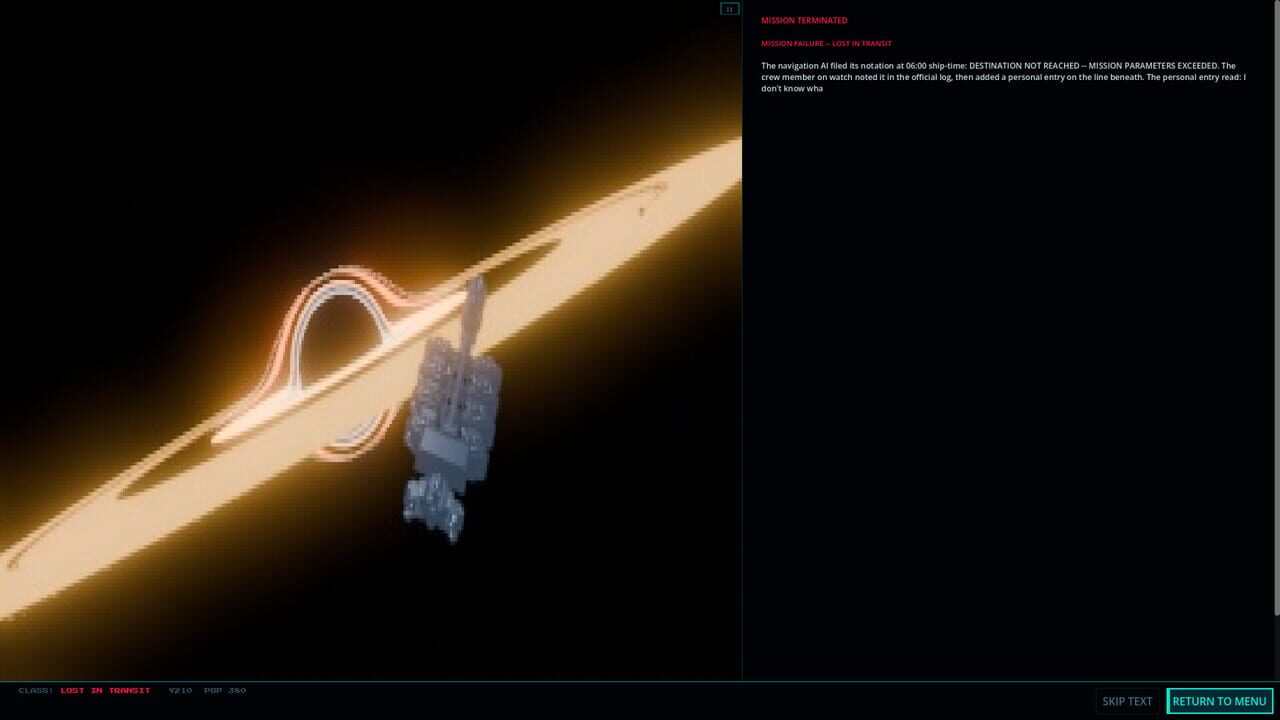
Établissement. Extinction. Transcendance numérique. Un vaisseau qui fait demi-tour. Un équipage qui s'élève sans atterrir. Chaque partie raconte une histoire différente. Ce qui atteint cette planète est la somme de tout ce que vous avez fait — et n'avez pas fait — à travers des siècles dans l'obscurité.
Vous ne le reconnaîtrez peut-être pas. Vous ne le voudrez peut-être pas.
Éditions et prix Steam
Avis des joueurs Steam
Je ne recommande pas pour le moment ce jeu. L'histoire est fantastique, mais si la traduction française est incomplète, il est très difficile de l'apprécier pleinement. J'attends de voir les éventuels mis à jour pour corriger la traduction. une fois...
Un bon petit jeux. On a fait le tour après une dizaines d'essai ou apres avoir trouver la planete idéale
Mises à jour et Actualités
0.30 is now on main!
Notes are the same from 0.30 experimental — now on main. Four systems land in 0.3.0: named identities the crew hardens into, the departure board, genetic decline as a force that can end the voyage, and the science team's long projects. The voyage also runs materially longer before it comes apart. Named identitiesThe ship becomes something, and it has a name. Ideology and the loss of knowledge now converge into named identities the crew forms from the decisions you already make. At a threshold the ship shows you what the crew has been becoming — the actual decisions, by year and outcome — and asks whether to make it official. Eleven identities across two lines. Six are forms of rule — officer rule, shared rule, ship religion, engineer rule, family rule, charter rule. Five are what is left when the knowledge goes — by the manual, machine worship, hand skills, improvised repair, forbidden knowledge. A run can hold one of each, and the pair is its own society. Identities harden; they do not switch. A formed identity moves through three tiers — Emerging, Established, Total — and only ever deepens. The crises you know grow options in its voice, appended at the second tier and replacing the neutral answers at the third; a standing action spends from the same yearly work budget as ship maintenance. Refusing the identity breaks a faction. The faction carrying the strongest lean walks out and its remnant resists for the rest of the run. Refuse at every fork and the crew stays only a crew — a rarer arrival, with its own ending. The readouts, the log, and the ending all speak it. A formed identity's name and tier show on the readouts; at the Total tier the log rereads its old entries in the identity's register; and what the ship became steers which ending fires and how the epilogue reads, down to a line for each founding practice that survived the crossing. The departure boardThe ship commits its departure corridor at the launch board. Year 1 offers three corridors on file — the nearest reachable system, the most promising world in the far window, and the densest cluster of onward stars — each a named, real star with its class, distance, and contact year. The choice sets your first system and the shape of the early voyage. The pre-launch founding log lists the same board. The corridor you commit at Year 1 is the one the launch record promised. Holding course keeps the maiden heading — the cluster corridor. The Sol system holds still when you commit. The drive keeps the maiden heading through the solar transit — the planets stay where they loaded, the flybys happen — and the committed corridor's course change executes at the heliopause exit, shown as a bend in the plotted route. The Sol-transit briefings run on every corridor, not just the default heading. Genetic declineGenetic diversity can now end the voyage. Decline drains the pool across generations; a depleted pool kills colonists and suppresses births. Founding bloodlines are load-bearing. When a founding line's last living carrier dies childless, that diversity is gone for good. Two new endings record where the genome goes: GENETIC EXTINCTION, and ONE LINEAGE — a colony that survives as a single genome. The long projectsThe science team works decade-scale studies. Three standing projects begin at launch — a drive harmonics study, closed-loop agronomy, and a hull fatigue atlas. The pace follows the living science staff and slows under knowledge regression and class stratification; field data found during the voyage joins the same queue. Found technologies are on the record. Everything acquired mid-voyage lists under SHIP LOADOUT with its year and source; live projects show progress and an estimated completion year. The longer voyageThe voyage runs longer before it comes apart. The choices that erode the crew's knowledge now cost less per decision, so a well-kept ship holds together decades further into the crossing. Crossing a social threshold no longer ends the run on the spot. Several endings that once fired the instant the crew's cohesion or knowledge crossed a line are now a yearly risk that climbs the deeper the ship goes; a ship near the break carries a warning that escalates. The late voyage is no longer empty. The back half of a long run now carries decisions of its own, set past year 200. Steam DeckLists scroll by trackpad drag, with a wider scrollbar to grab. The Mission Archive closes when you click outside it, and its BACK button stays pinned in reach. Ending textA ship that loses power gets its ship-loss ending rather than a survival coda. The abandoned-lifeboat line appears only on runs that landed. A collapse epilogue no longer repeats its "eleven years" line. PolishThe intro sequence keeps its aspect ratio on 16:10 screens instead of stretching to fill. Deep ideological drift now calls the ship the ark; the identity-total announcement names the identity that became total. LanguagesA number of new lines temporarily read in English in German, French, Italian, and Spanish while their translations are refreshed.
Dead Reckoning v0.3.0 — Corridors & Bloodlines (experimental)
Three systems land on the experimental branch: the departure board, genetic decline as a force that can end the voyage, and the science team's long projects. This build ships to the experimental beta branch (opt-in) only — the stable branch stays on 0.2.125. The departure boardThe ship commits its departure corridor at the launch board. Year 1 offers three corridors on file — the nearest reachable system, the most promising world in the far window, and the densest cluster of onward stars — each a named, real star with its class, distance, and contact year. The choice sets your first system and the shape of the early voyage. The pre-launch founding log lists the same board. The corridor you commit at Year 1 is the one the launch record promised. The Sol system holds still when you commit. The drive keeps the maiden heading through the solar transit — the planets stay where they loaded, the flybys happen — and the committed corridor's course change executes at the heliopause exit, shown as a bend in the plotted route. The Sol-transit briefings run on every corridor, not just the default heading. Genetic declineGenetic diversity can now end the voyage. Decline drains the pool across generations; a depleted pool kills colonists and suppresses births. Founding bloodlines are load-bearing. When a founding line's last living carrier dies childless, that diversity is gone for good. Two new endings record where the genome goes: GENETIC EXTINCTION, and ONE LINEAGE — a colony that survives as a single genome. The long projectsThe science team works decade-scale studies. Three standing projects begin at launch — a drive harmonics study, closed-loop agronomy, and a hull fatigue atlas. The pace follows the living science staff and slows under knowledge regression and class stratification; field data found during the voyage joins the same queue. Found technologies are on the record. Everything acquired mid-voyage lists under SHIP LOADOUT with its year and source; live projects show progress and an estimated completion year. Steam DeckLists scroll by trackpad drag, with a wider scrollbar to grab. The Mission Archive closes when you click outside it, and its BACK button stays pinned in reach. Ending textA ship that loses power gets its ship-loss ending rather than a survival coda. The abandoned-lifeboat line appears only on runs that landed. A collapse epilogue no longer repeats its "eleven years" line. PolishThe intro sequence keeps its aspect ratio on 16:10 screens instead of stretching to fill. Deep ideological drift now calls the ship the ark; identity announcements are clearer and sound less like bad copy (yeah that's me; some of these were late night writing sprints, and I need to clean them up — but they're a start). LanguagesNote: A number of new lines temporarily read in English in German, French, Italian, and Spanish while their translations are refreshed. Opt in under Properties > Betas > experimental, and let me know your thoughts.
Pre-launch screens are on experimental
Pre-launch screens are on the experimental branch now, if you want to look. This is part of the roadmap announced two weeks ago, and I promised to keep things updated.Before the crew goes into cryo, you set what the ship carries and why it left Earth — the charter, the research, the crew you wake first, the ship's fittings. It's the part I'm working on next. Fair warning: it doesn't do anything yet. You can open the screens and look around, but none of the choices are wired up. The game's still in early access, and when I started I said I'd keep posting and show the work as it happens — warts and all — so you could weigh in while things are still taking shape. This is me keeping that promise. I'd rather put it out unfinished and hear what you think than wait until it's done and find I built the wrong thing. To see it: Steam → Dead Reckoning → Properties → Betas → experimental. If you have thoughts — on the idea, the charter framing, or just how it looks — I'd like to hear them. Thanks for sticking with the in-progress version.Why show incomplete work?I'll be posting updates like this to keep the Early Access crowd involved and let them know the design decisions. I feel those who do like this game understand the kind of game I'm going for, and although I will make a final decision based on my overall vision, I do want input. If possible, I try to accommodate any playing style.What's next?I'll be on a break from July 1st to July 5th, and I'll be off-grid so I won't be able to reply. I'll be sure to read all messages when back, but for now I thank all of you for your patience at this time; it's been an exhausting release week but I feel the ship is becoming stable.After that, I plan on finishing up a basic pre-launch and moving on to setting up the six (6) ideology flavours and five (5) regression flavours. Very simply, here they are: - Officer rule — the chain of command becomes the government; order over dissent, the "true crew."- Shared rule — no hierarchy; everything pooled, the council decides together.- Ship religion — the voyage turns sacred; the dead become ancestors, the log read as scripture.- Engineer rule — the experts run everything; every life measured by how useful it is.- Family rule — the crew splits into bloodline houses; berths and roles pass by descent — alliance and feud.- Charter rule — keep faith with the original mission, to the letter, and resist any drift from it.For regression, it's more of how they forget how to run the ship — what's left when the knowledge starts to go:- By the manual — keep the procedure, lose the reason; the manual recited like catechism.- Machine worship — appease what you can't repair; the reactor becomes a god.- Hand skills — knowledge survives as craft, taught hand to hand, master to apprentice.- Improvised repair — no theory left, only working hacks — brilliant until one isn't.- Forbidden knowledge — rules with the reasons stripped out: "never open that hatch." Some fun society x regression combos: - Engineer rule × Machine worship — ritual technocracy- Ship religion × Forbidden knowledge — taboo-bound theocracy- Officer rule × By the manual — by-the-book command- Family rule × Hand skills — hereditary craft guilds- Shared rule × Improvised repair — make-do commune- Charter rule × By the manual — rigid mission rule- Officer rule × Machine worship — military theocracy- Family rule × Forbidden knowledge — taboo-bound clans- Ship religion × Hand skills — monastic order- Engineer rule × Improvised repair — hand-to-mouth technocracy- Shared rule × Forbidden knowledge — taboo-bound commune- Charter rule × Relearning (growth) — reviving mission rule PhasesOnce these are in, it'll just be a slow process of wiring them up, reworking events to follow templates based on the above, making unique events to show each individual flavour as well as combination flavours, as well as unlocking new decisions based on the regression and ideology (like authoritarian ideology being high enough to blow dissenters out an airlock).Anyways, it's going to be a long haul, but once those two are in, there is a solid foundation on which to build.See you guys soon.— Garan Lorn/Selenodrome